fuzhounese.org
Visit fuzhounese.orgPreserving the Fuzhounese dialect. The world’s first collaborative Fuzhounese–English dictionary. With 3,790 entries and growing, we are also gathering native-speaker audio to train a language model to ensure the sound of the language never disappears.
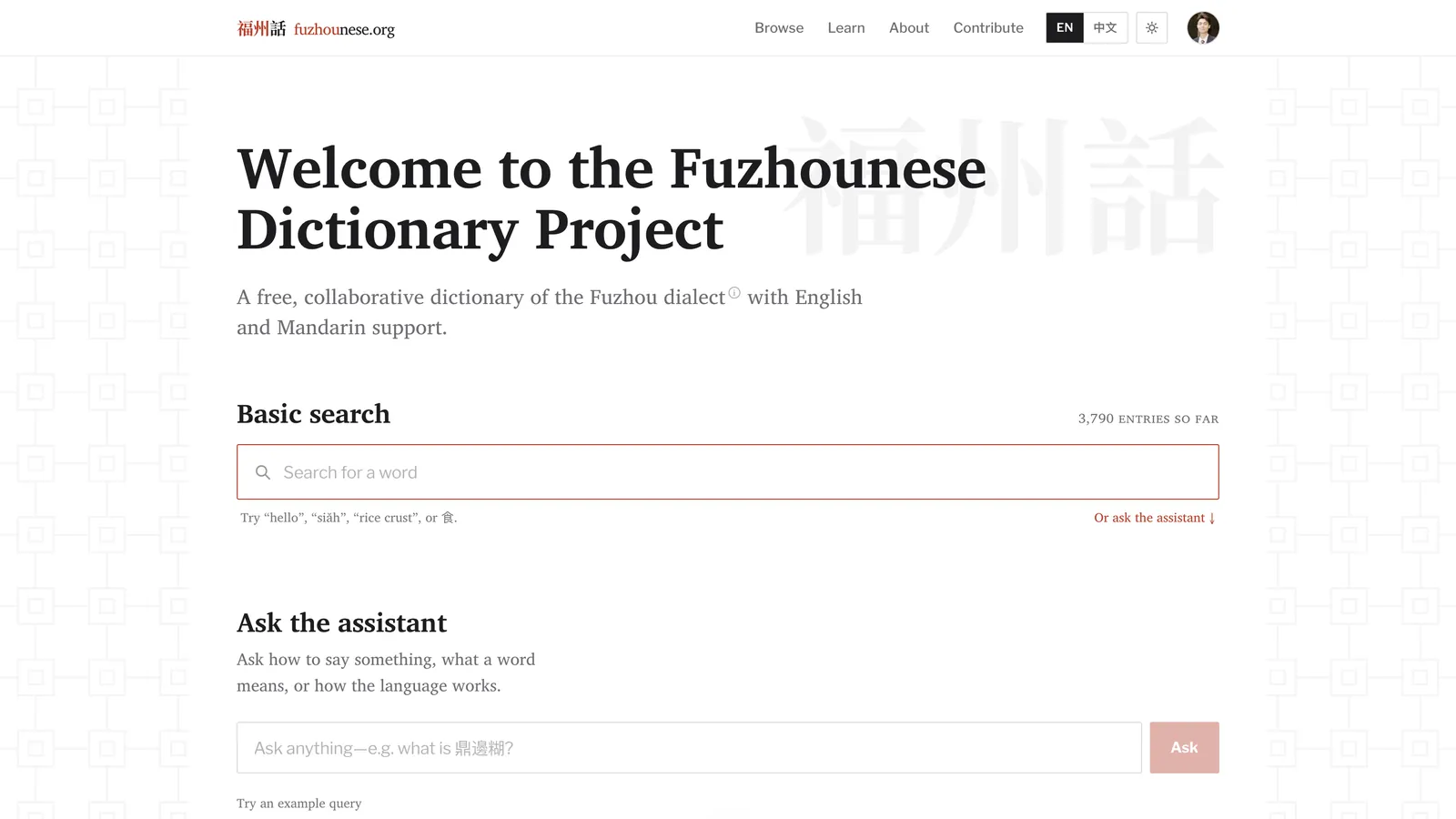
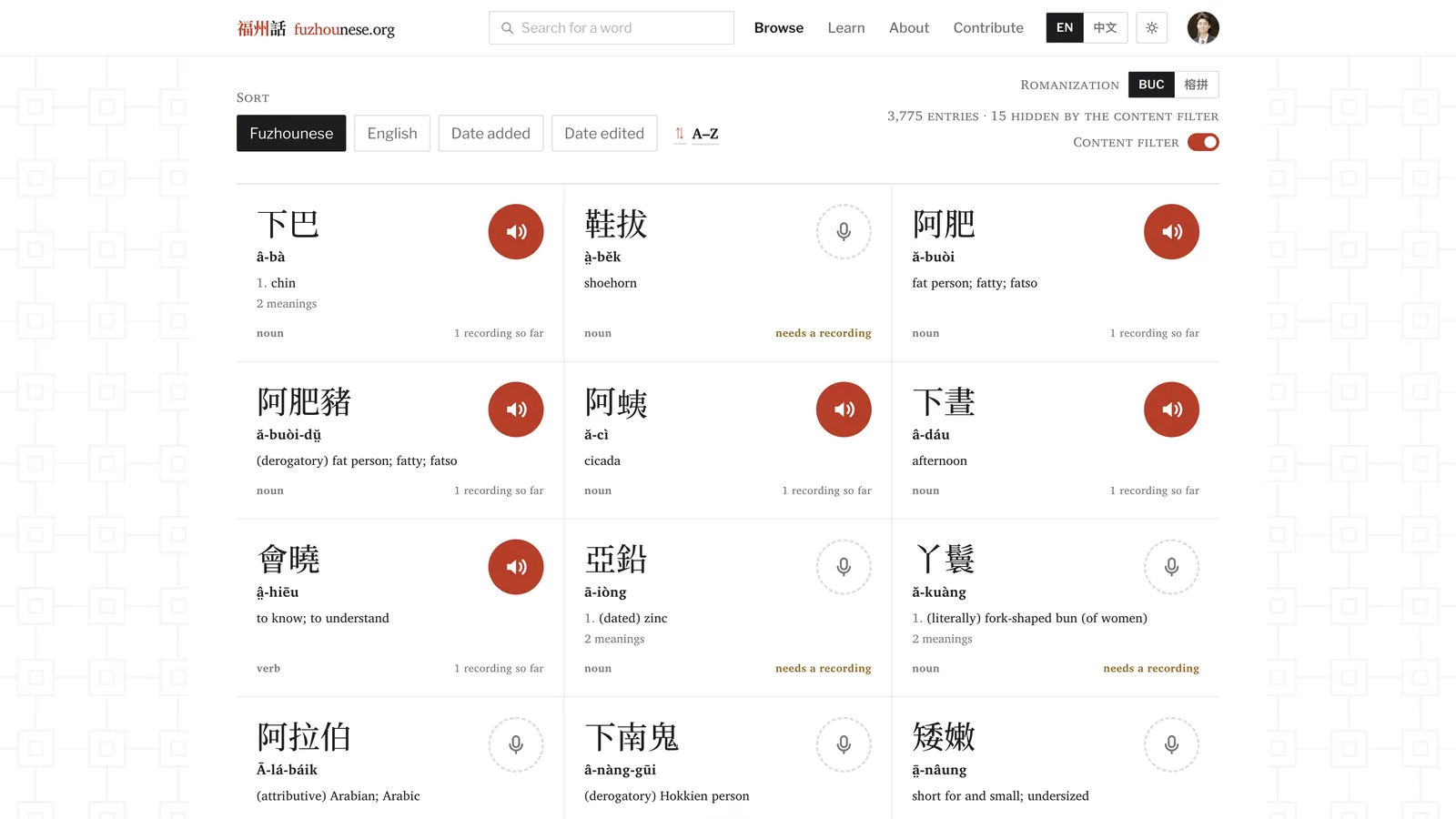
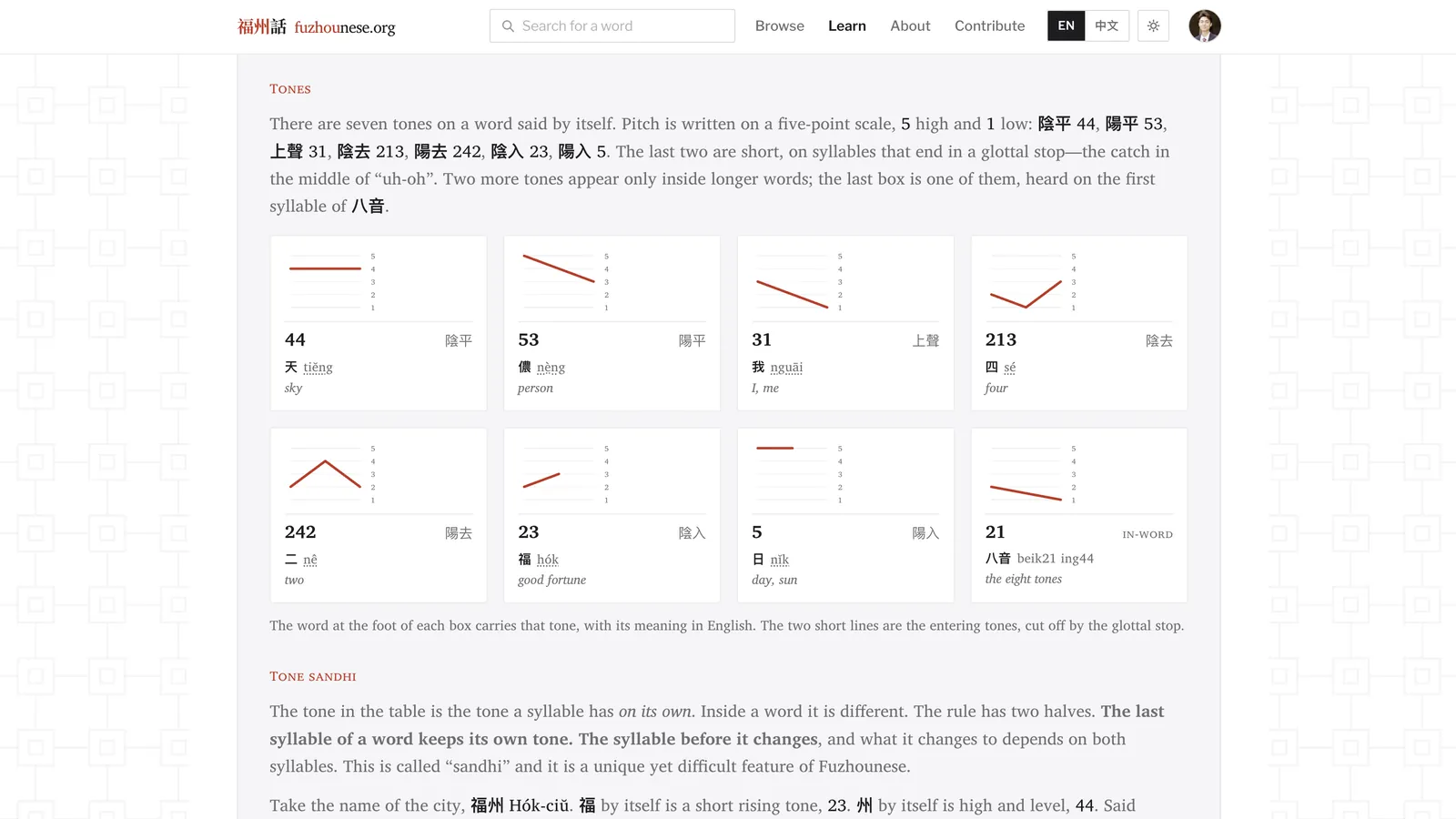
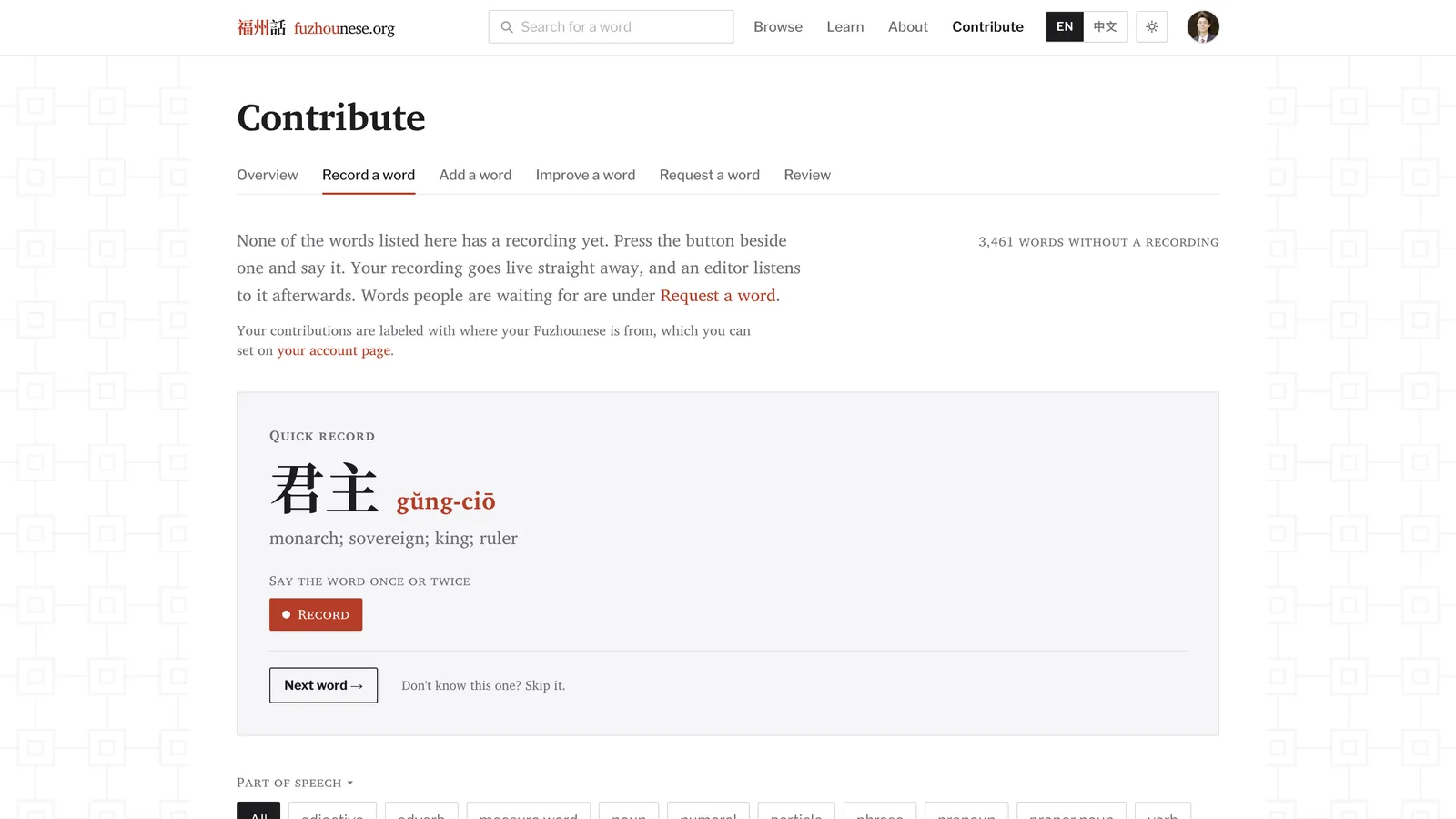
The front page: search, or ask the AI assistant
Technical details
The dictionary has an assistant, powered by Claude, that answers questions based on the content in the dictionary such as: "translate 'have you eaten?' in Fuzhounese", "how many meanings does 'siah' have?", or "explain tone sandhi". Since Fuzhounese varies noticeably from town to town, the dictionary was designed to accommodate variants of words and pronunciations from across the Fuzhounese-speaking world.
- Claude
- Search across 3 scripts
- Native-speaker audio
Inspiration
Fuzhounese is the dialect my family speaks, and there was no English dictionary of it online—or one that emphasized the geographical diversity of the language. I wanted a place to preserve the words and the way variety of ways native speakers voice them. The goal of the project is to serve Fuzhounese speakers, curious language learners, and linguists alike.
Who it’s for
Families and heritage
- Children and grandchildren of Fuzhounese speakers learning to talk with their grandparents.
- Recording elderly relatives saying words, so their voices are kept.
- Looking up words remembered from childhood whose spelling no one knows, using the assistant.
- Parents raising children with some Fuzhounese at home.
- Family reunions and holidays, for example finding the right greeting or food name.
Communities
- Fuzhounese communities in New York, Malaysia, Singapore, and Japan sharing their local variants.
- Chinatown community centers using it for elder outreach or youth programs.
- Churches and associations that serve Fuzhounese speakers.
Practical and professional
- Healthcare workers, interpreters, and social workers serving Fuzhounese-speaking patients, for example in Sunset Park or the Lower East Side.
- Restaurant staff, since much of New York’s Chinese restaurant workforce is Fuzhounese.
- Lawyers and immigration advocates working with Fuzhounese-speaking clients.
Research
- Linguists studying Min languages, tone sandhi, or language shift.
- A training set of native-speaker audio for speech recognition or text-to-speech models.
- Teaching how dialects die and how to document them.
- Comparing Fuzhounese with Hokkien, Teochew, and Mandarin.