getleggio.com
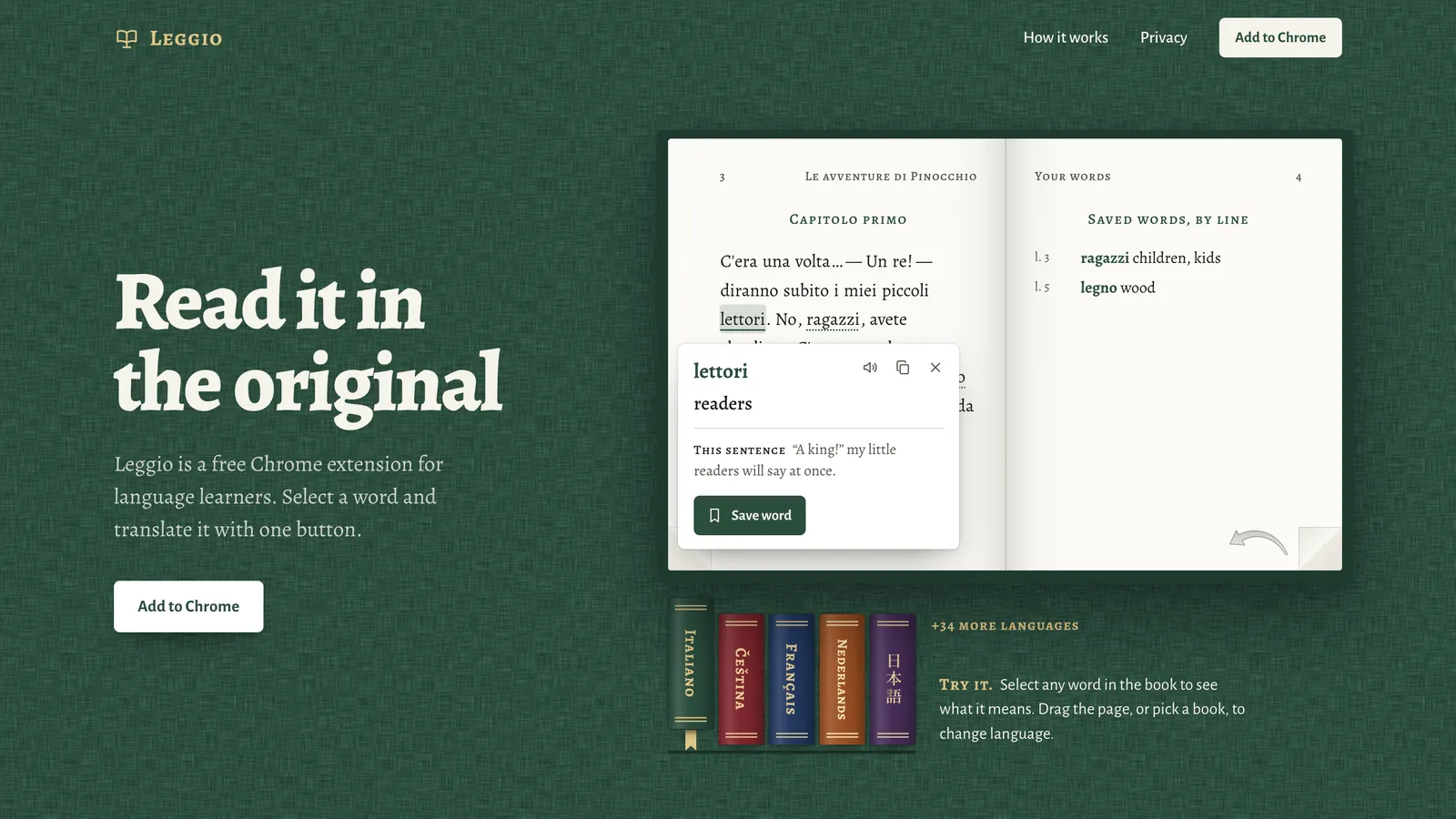
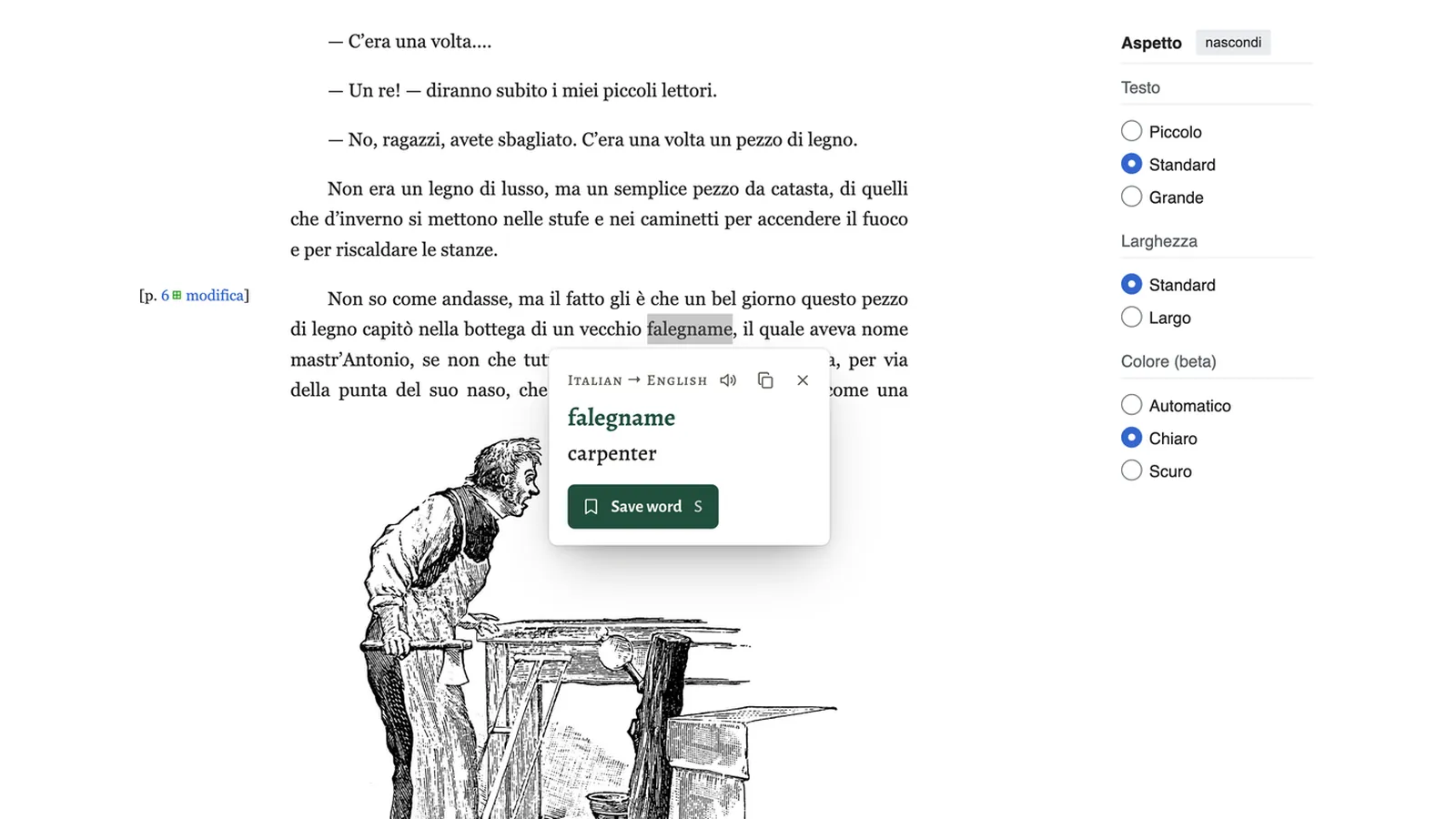
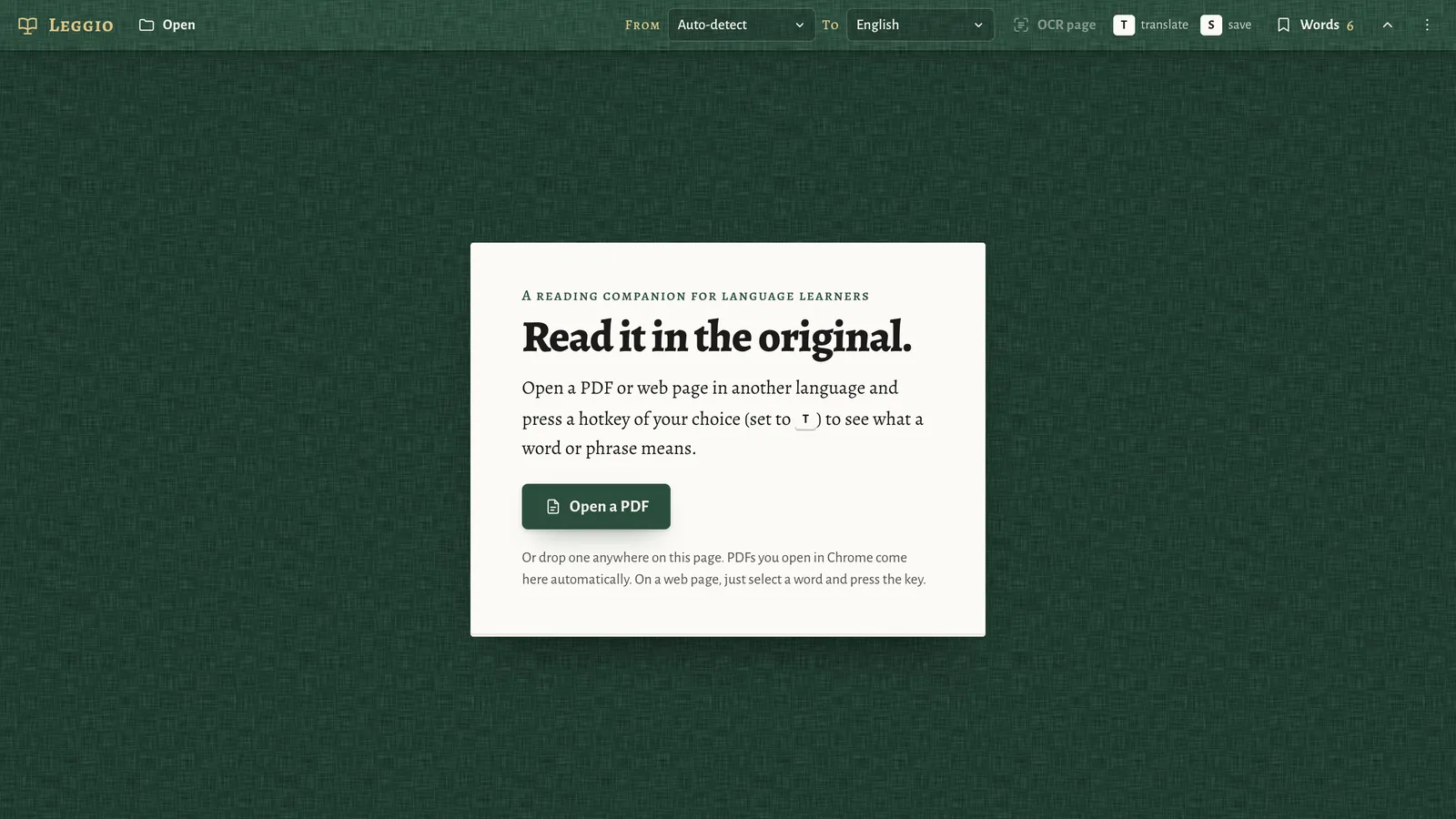
Visit getleggio.comInstant, context-aware translations on Chrome for language learners. Just hold a hotkey and select any foreign word or phrase to see its exact meaning pop up instantly and hassle-free. Leggio analyzes the entire sentence to ensure you get the perfect translation every single time. Supports 34+ languages.
getleggio.com (homepage)
Technical details
Leggio translates with the latest translation models built into Chrome, so the words you select are translated on your own computer, immediately and for free. You can also plug in your own API key if you'd prefer DeepL or Google Cloud translations.
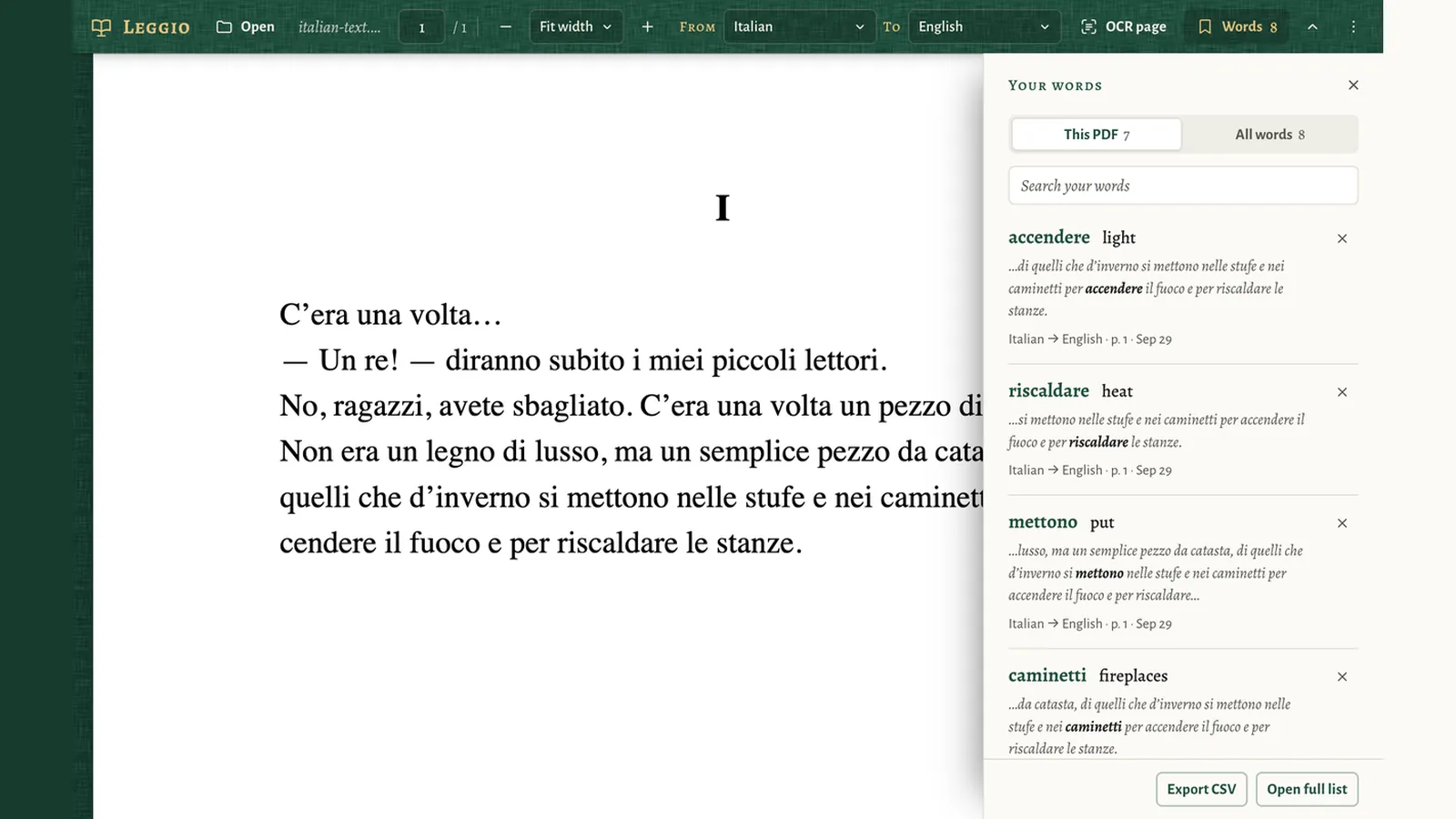
No data goes to a server, no account required, no analytics tracked, and no ads included. Built-in 'saved words' functionality allows users to build word and phrase lists for better studying and easy export to flash card tools.
- Chrome built-in AI
- On-device
- Context-aware
- Web pages + PDFs
Inspiration
Reading in a language you are learning is one of the best ways to become fluent. Instead of stopping at every word you do not know, switching to an external dictionary, and being unsure if the meaning stays the same in context, Leggio unobtrusively delivers the right meaning as an elegant tooltip within the text, so the reading can go on.
Who it’s for
Learners
- Reading the news in the language you’re learning, like Le Monde, El País, or NHK Easy, without switching tabs.
- Working through a novel or short story as a PDF, for example Pinocchio in Italian or Borges in Spanish, and building a word list as you go.
- Reading Reddit, forums, or recipe blogs in the language you’re learning, so practice fits into ordinary browsing.
- Exporting saved words to CSV and importing them into Anki or Quizlet for spaced repetition.
- Heritage speakers who understand a language but can’t read it well, catching up on the written form.
Students and academics
- Graduate students reading sources in a language they read slowly, such as German philosophy, French theory, or Spanish archival documents.
- Getting through reading-knowledge language exams for PhD programs.
- Historians working with scanned foreign-language documents, using OCR on the page.
- Reading architecture or design writing that hasn’t been translated, such as Italian or Japanese journals.
Work and travel
- Reading foreign-language contracts, reports, or emails with the full context, instead of pasting single lines into a translator.
- Researching a trip on local-language sites, which are often better than the English versions.
- Expats reading forms, school letters, and government sites.
- Reading foreign-language documentation or GitHub issues.
Privacy
- Anyone who doesn’t want what they read sent to a server, since translation happens on the device.