loretour.com
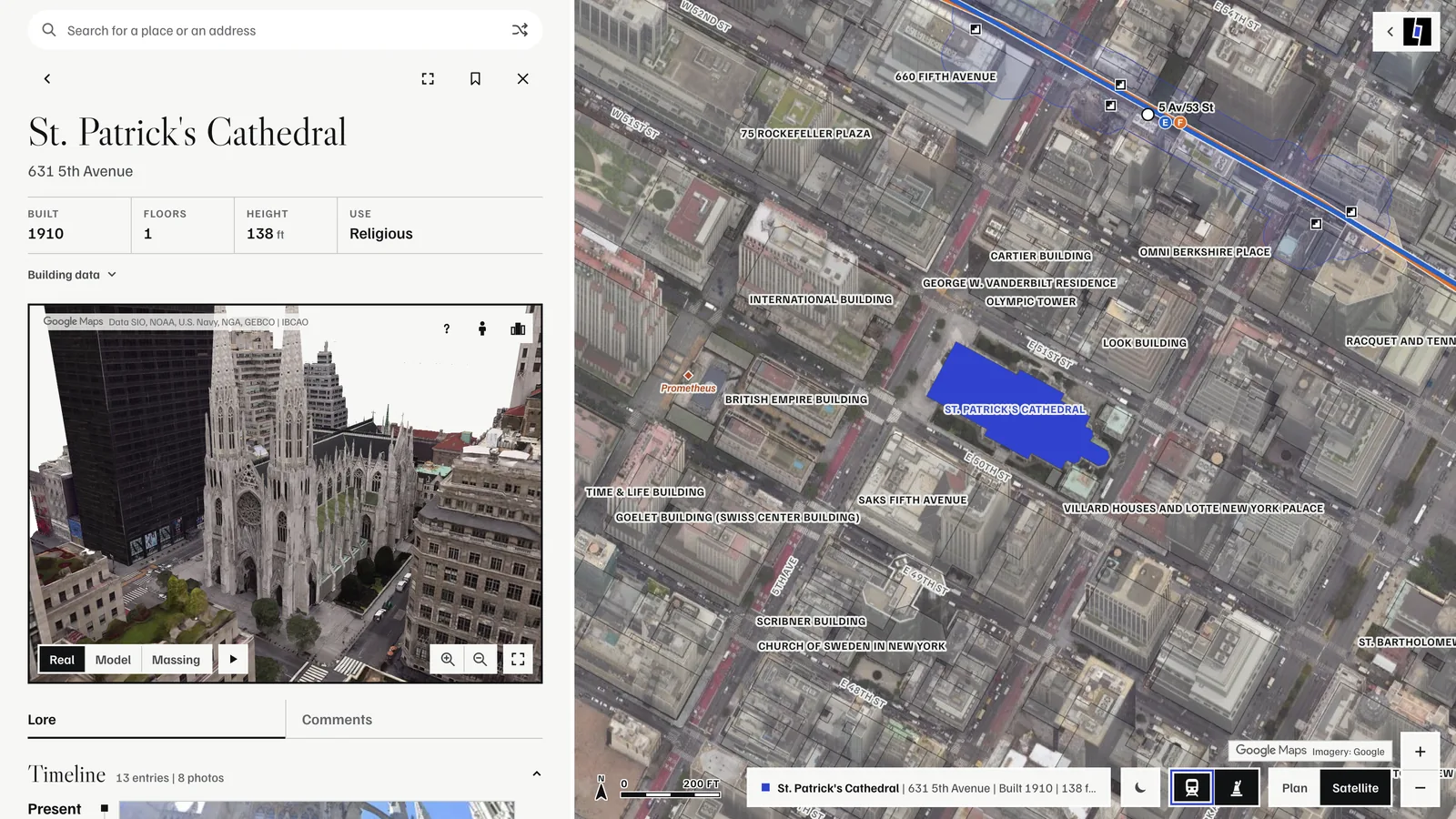
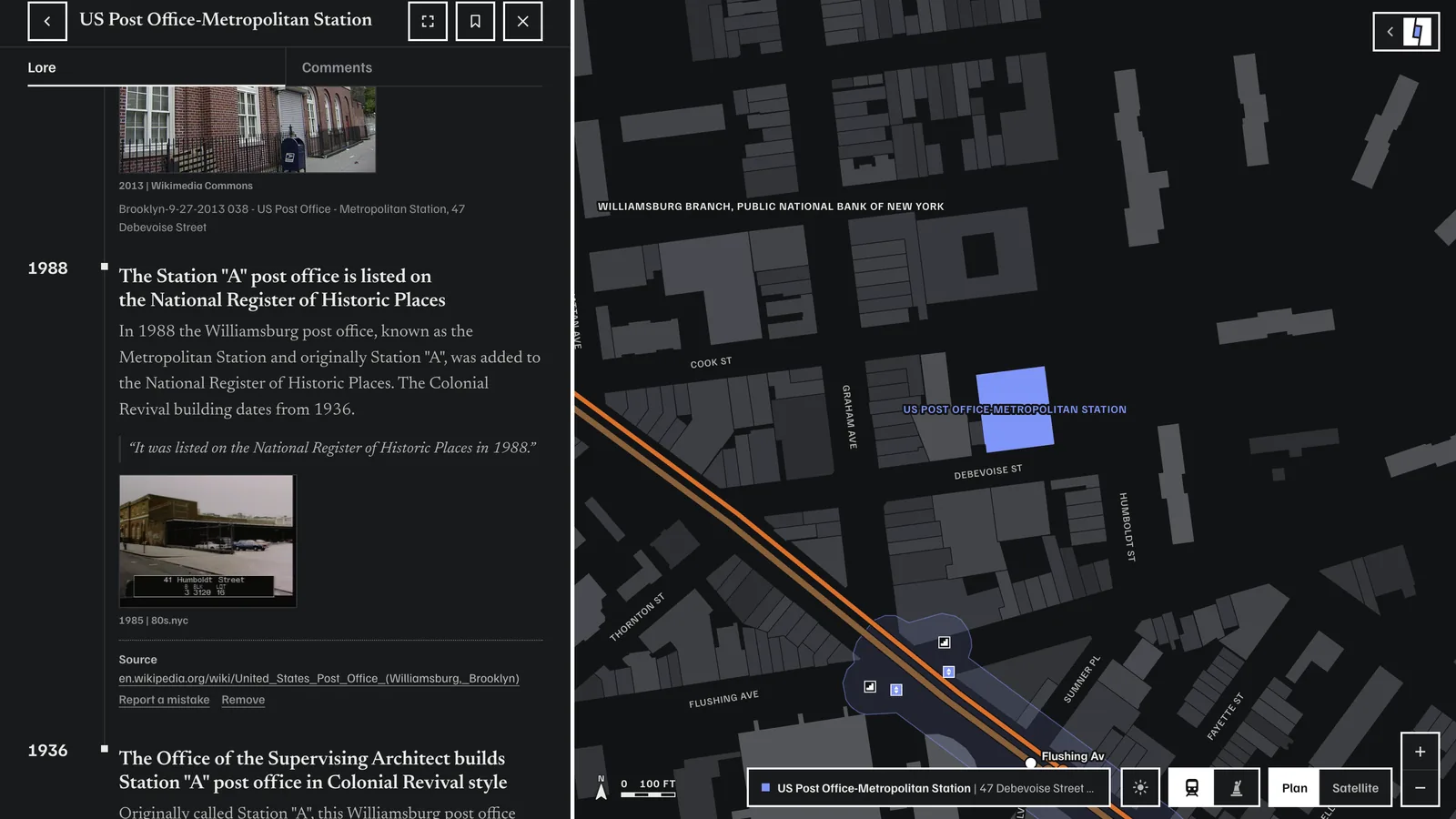
Visit loretour.comUncover the hidden history of New York City, building by building. Explore an interactive map of all one million structures to learn about their lore. Tap any building to dive into deep historical timelines, verified archival photos, crowdsourced visitor notes, an immersive 3D view, and more.
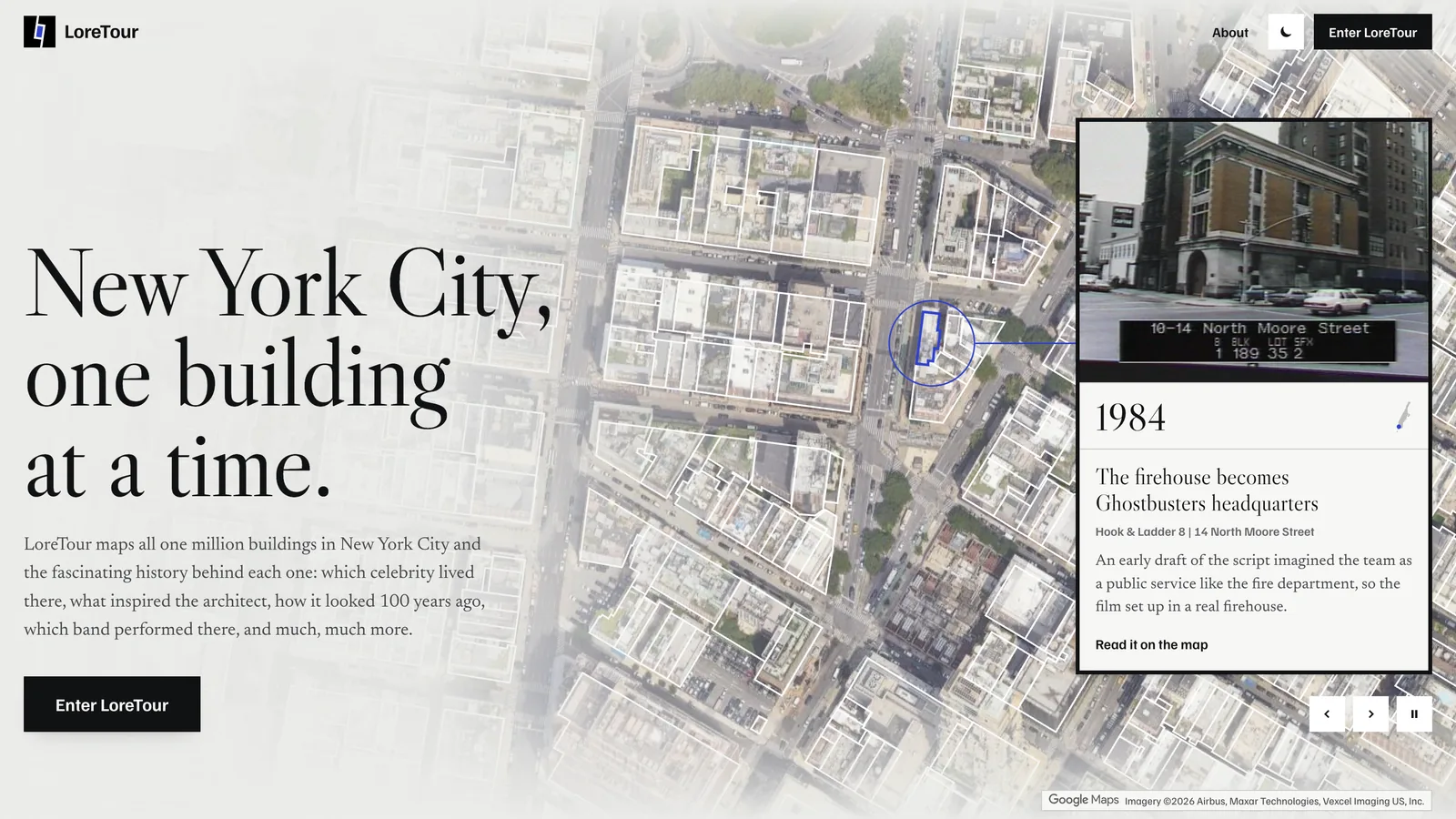
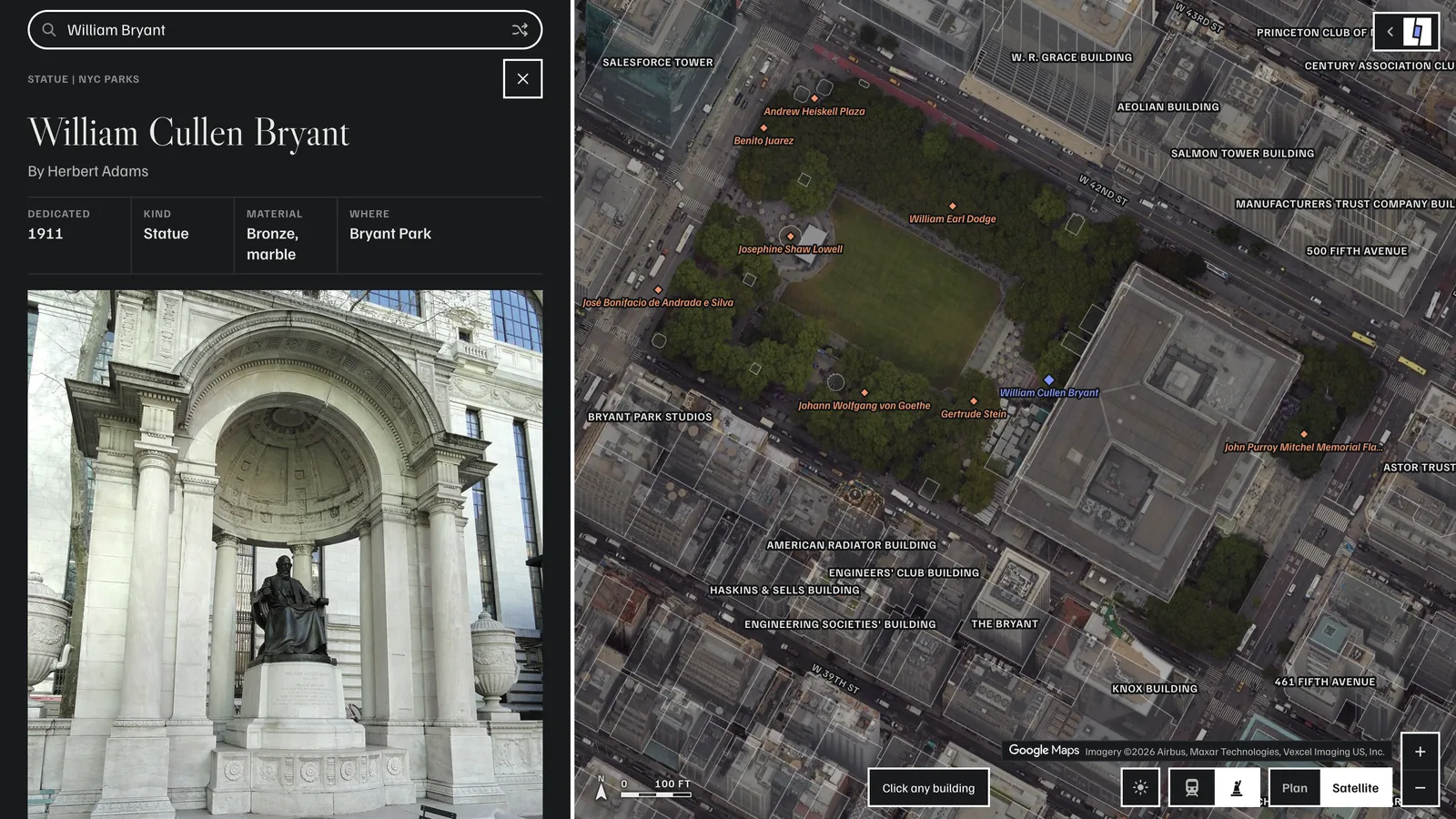
The front page: a building and one of its stories
Technical details
Footprints, roof heights, and years come from NYC Open Data. Satellite and 3D views come from Google’s Photorealistic 3D Tiles, and archive photos open on Urban Archive.
The record started with researched entries for buildings in every Manhattan neighborhood, drawn from Wikipedia and the city’s building historians. It now covers all five boroughs, and anyone signed in can add to it.
- 1 million buildings
- NYC Open Data
- 3D Tiles
- Cited sources
Inspiration
Walk past almost any building in New York and there is no way to find out what happened inside it. I wanted a map where every building has a record: what it was, who was there, and what it saw.
Who it’s for
Visitors and locals
- Walking a neighborhood and opening the history of whatever building you’re standing in front of.
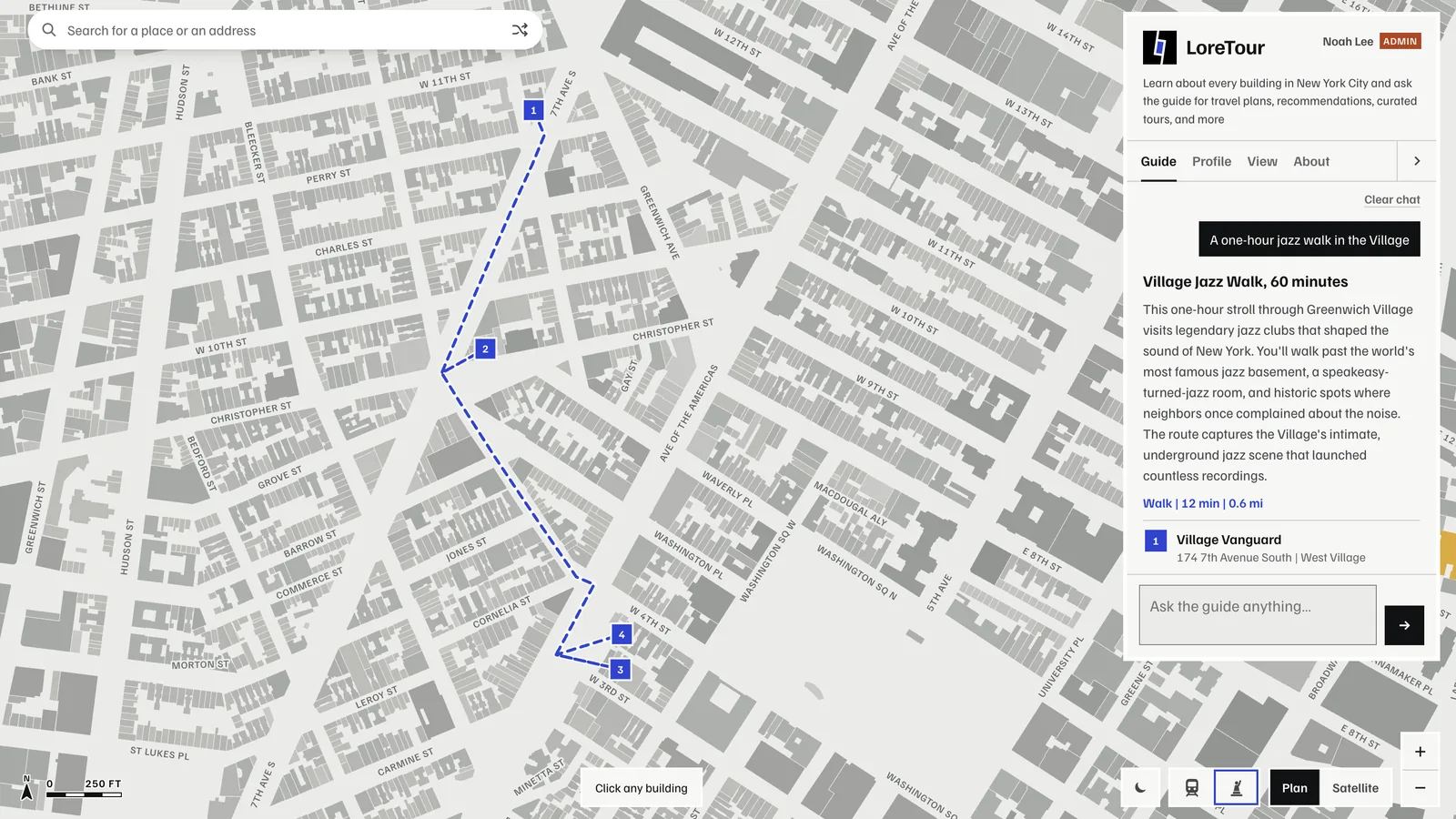
- Planning a themed walk with the guide, such as famous fires, jazz clubs, Gilded Age mansions, or first skyscrapers.
- Tourists who want more than the usual landmarks.
- New Yorkers learning what their own building or block used to be.
- Planning a date or a day out around buildings with good stories.
Housing
- Apartment hunters checking a building’s age, past, and character before signing a lease.
- Real estate agents using a building’s history in listings.
- Hotels, restaurants, and bars telling the story of their building to guests.
Teaching and research
- Teachers assigning a “history of your block” project.
- Architecture and urban-history students studying how the city was built, layer by layer.
- Researchers starting from cited sources and archival photos for a building.
- Writers and novelists finding settings and true details for scenes.
Creative and media
- Tour guides building scripts and routes.
- Filmmakers and photographers scouting locations with a history.
- Podcasts and social posts built on “this building’s story.”
Community
- Longtime residents adding memories as crowdsourced notes, so the history isn’t only official history.
- Preservationists making the case for buildings at risk of demolition.
- Genealogists finding where ancestors lived or worked.